
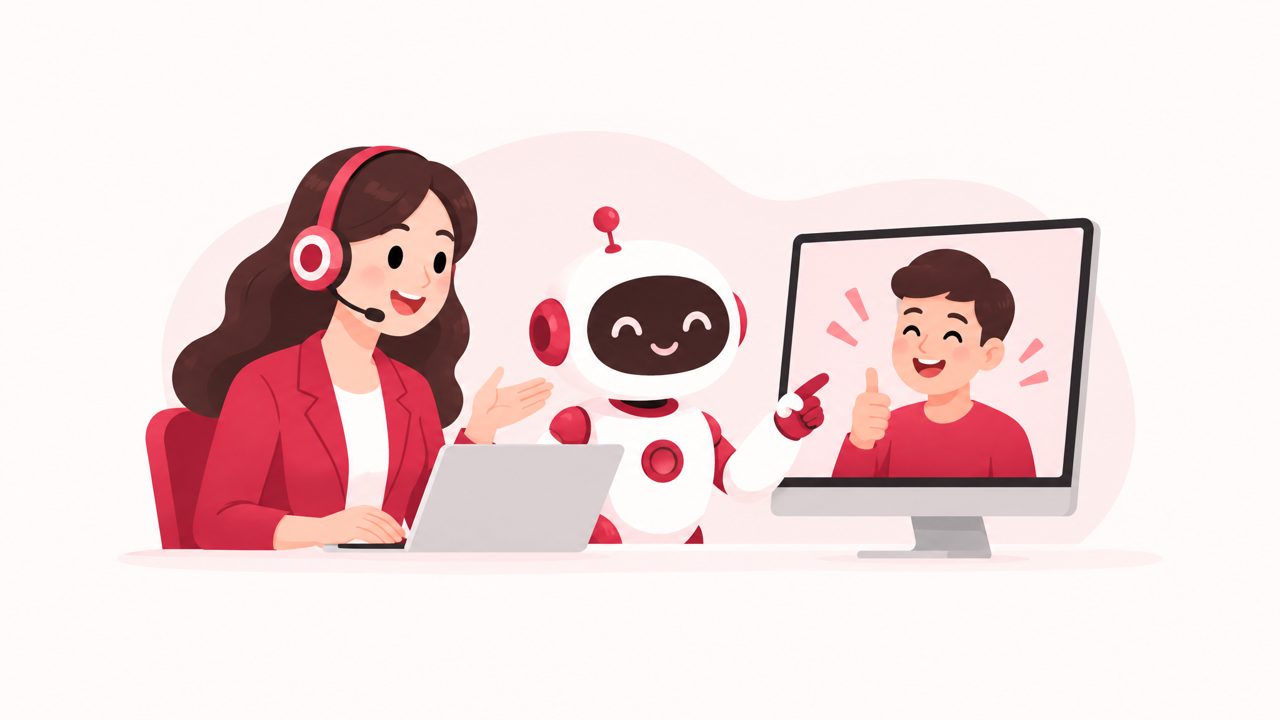
There's a fear that gets whispered at every conference and typed into every comment section: "AI is replacing humans." And on the surface, it's easy to see why people worry. Chatbots answering questions. Agents handling support tickets. Automated replies going out at 3 a.m.
But here's what most people get wrong: the best AI agents aren't replacing humans — they're making room for more human connection, not less.
“The best AI agents don't replace humans — they make the human touch possible at scale.”
The Real Problem Was Never "Too Much Human"
Think about the last time you contacted a company for help. Chances are, you waited. You were put in a queue. You got a generic reply. And when you finally reached a person, they were rushed — because there were 47 other tickets behind yours.
The problem was never that businesses had too many humans helping. The problem was that humans were spending 80% of their time on questions that had simple, repeatable answers — "What's your return policy?" "How do I reset my password?" "What time do you close?"
That's not meaningful human interaction. That's a human being used as a search engine. And it leaves no time for the moments where a human actually matters — the frustrated customer who needs empathy, the complex deal that needs a personal touch, the VIP client who deserves undivided attention.
AI Agents Handle the Repetitive — So Humans Can Handle the Meaningful
When you deploy an AI agent on your website or inside your business, you're not firing anyone. You're freeing them.
- Your support team stops answering the same 15 FAQs for the hundredth time — and starts focusing on the edge cases that actually require creative problem-solving
- Your sales team stops qualifying dead-end leads manually — and spends more time having real conversations with prospects who are genuinely ready to buy
- You, as a business owner, stop being the bottleneck for every single inquiry — and start doing the strategic, high-value work that grows your business
An AI agent doesn't eliminate the human touch. It makes the human touch possible at scale.
The Customer Experience Actually Gets Better
Here's the counterintuitive truth: customers prefer the hybrid. They want an instant answer to their simple question at midnight — and they want a real human when things get complicated. An AI agent gives them both.
Studies consistently show that customer satisfaction goes up, not down, when AI handles Tier 1 support — because response times drop from hours to seconds. And when a customer does get routed to a human, that human isn't overwhelmed, burnt out, or rushing. They have the context, the time, and the energy to actually connect.
What This Looks Like in Practice
Imagine you're running a coaching business. Before an AI agent, your day looked like this:
- Morning: Answer emails asking about pricing
- Midday: Reply to DMs asking what's included in a package
- Afternoon: More emails about scheduling
- Evening: Finally sit down to do actual coaching prep — but you're drained
Now, with an AI agent trained on your methodology and FAQs:
- Morning: Your agent already answered last night's inquiries, and two prospects booked discovery calls
- Midday: You spend an hour on a deep, focused session with a client
- Afternoon: You create new content, plan your next workshop, or just take a break
- Evening: You're actually off the clock
The human touch didn't disappear. It got concentrated where it matters most — in the coaching session itself.
"But What If My Customers Hate Talking to AI?"
This is the most common objection, and it usually comes from imagining the worst chatbots of 2019: rigid scripts, dead-end loops, "I don't understand your question."
Modern AI agents are different. When you build your own on a platform like KaHappy, you train it on your knowledge, give it your brand's tone, and set the rules for when it should hand off to a human. Your visitors aren't talking to a generic robot — they're talking to an extension of your brand that knows your business inside and out.
And the data backs it up: most visitors can't tell — or don't care — whether they're chatting with AI or a person, as long as they get a helpful answer fast. The frustration was never about AI itself. It was about bad implementations.
The Future Is Human + AI — Not One or the Other
The businesses that win in the next five years won't be the ones that go "all AI" or the ones that stubbornly refuse to adopt it. The winners will be the ones who use AI to amplify their humanness.
Build an agent that handles the easy stuff. Train it well. Give it your voice. And then pour all that freed-up time and energy into the moments that only you — a real, empathetic, creative human — can deliver.
The human touch isn't dead. It's just finally getting the room to breathe.